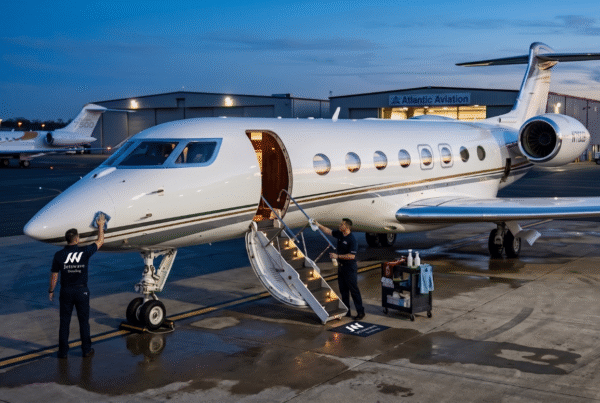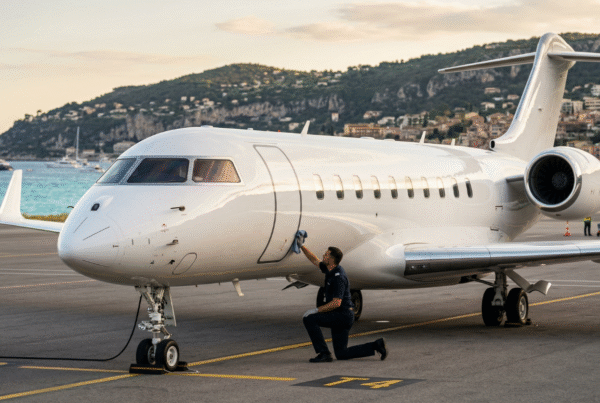



The 2026 FIFA World Cup begins on June 11. The final is on July 19, 2026, at MetLife Stadium in East Rutherford, New Jersey, 14 miles from Midtown Manhattan, 8 miles from Teterboro Airport, and squarely inside the service area of Jetswave Detailing.
This is not a distant event on a future calendar. It is 132 days away as of today. And for private jet owners based across Massachusetts, New York, New Jersey, Connecticut, and the broader Northeast, the aviation planning window for the World Cup is not June. It is right now.
The 2026 FIFA World Cup is the largest sporting event ever hosted on North American soil. Forty-eight nations competing in 104 matches across 16 host cities in the United States, Canada, and Mexico. More than six million visitors expected across the tournament. A World Cup final audience projected in the hundreds of millions globally. And the centerpiece fixture – the final itself – happening at MetLife Stadium, the same venue where Chelsea beat PSG 3-0 in the FIFA Club World Cup final last July.
Private jet activity in the Northeast is going to reach levels this region has never seen between June and August. Airport slot restrictions are already being flagged at JFK and EWR for match days. FBO capacity at Teterboro (KTEB), White Plains (KHPN), and Morristown (KMMU) will be under significant demand pressure throughout the summer. And the private jet owners who arrive at those FBOs in the best condition – aircraft immaculately detailed, cabins reset, exteriors protected – will be the ones who made the decision to establish a maintenance schedule months in advance.
That decision starts in March. Here is everything Northeast private jet owners need to know about aircraft detailing and the 2026 World Cup.
The World Cup Is Coming to Your Backyard – What That Means for Private Aviation
The geography of this World Cup is unlike anything private aviation in the Northeast has experienced before. For owners based in Massachusetts, New York, New Jersey, and Connecticut, two of the tournament’s most significant venues are within direct driving distance of your home FBO.
MetLife Stadium – World Cup Final, July 19, 2026
MetLife Stadium in East Rutherford, New Jersey is hosting the 2026 FIFA World Cup final. This is the most-watched sporting event on the planet. The stadium – capacity 82,500 – is located 8 miles from Teterboro Airport (KTEB), which is the primary private aviation hub for the New York metropolitan area and one of the busiest FBOs in the world.
The private aviation demand around a World Cup final at MetLife will be extraordinary by any historical measure. For context, the Champions League final in Munich last year saw private jet movements increase by 30-50% over standard weeks, with FBO capacity stretched and slot availability severely constrained at primary airports. The World Cup final will dwarf that. Aviation planning experts are already advising that slot restrictions at JFK (KJFK) and Newark (KEWR) are likely on match days, and that Teterboro, White Plains (KHPN), and Morristown (KMMU) will serve as critical relief airports for private aviation throughout the tournament.
For Jetswave, this means our primary service airports – Teterboro, White Plains, Hanscom Field (KBED), Boston Logan (KBOS), and the network of FBOs we serve across 8 Northeast states – will be operating at maximum capacity from late June through late July. The owners who have their aircraft on a consistent detailing schedule from March onward will arrive at those FBOs in the right condition. The owners who scramble in June to find detailing availability before the tournament will find themselves competing for a very limited service window.
Gillette Stadium Boston – Group Stage Host Venue
Gillette Stadium in Foxborough, Massachusetts is a FIFA World Cup 2026 group stage host venue. This places the Boston private aviation market – Logan Airport (KBOS), Hanscom Field (KBED), and the regional FBO network across Massachusetts – directly in the World Cup travel footprint.
Group stage matches at Gillette will bring significant private aviation activity to the Boston area throughout June. For private jet owners based in Massachusetts and southern New Hampshire, this is your local event. And for owners across all 8 Northeast states who plan to attend multiple fixtures, Gillette Stadium combined with MetLife Stadium creates a two-venue itinerary entirely within Jetswave’s service region.
Airport Congestion at JFK, EWR, and Why FBOs Matter
The commercial aviation congestion around World Cup match days in the New York and New Jersey area will be significant. JFK and Newark are already slot-controlled airports that operate near capacity under normal conditions. During peak World Cup weekends – particularly knockout rounds and the final – commercial flight congestion will cascade into private aviation slot availability at those airports.
This is precisely why private jet owners rely on dedicated FBOs at secondary airports during major events. Teterboro, White Plains, and Morristown provide the access, speed, and service quality that private aviation demands – without the commercial terminal congestion. But FBO capacity at those airports will also be under pressure during peak World Cup days.
The strategic advantage belongs to owners who have established service relationships in advance. Aircraft that arrive at Teterboro for a World Cup final already detailed, already on a maintenance schedule, and already known to the service providers on that ramp have a fundamentally different experience from aircraft that arrive after months of deferred maintenance.
Why You Need to Start Thinking About Your Aircraft Now
There is a precise reason why March is the right month to begin your World Cup aircraft detailing preparation, and it is not marketing urgency. It is the practical reality of how Google indexes content and how aircraft maintenance compound cycles work.
From an SEO perspective, every day you delay publishing content about World Cup private jet travel and aircraft detailing is a day Google does not have to build authority for those search terms on your behalf. But from a maintenance perspective, the same logic applies to your aircraft. Every month between now and June is a month of compounding wear, environmental exposure, and deferred cleaning that makes the pre-tournament reset harder, longer, and more expensive.
Private jet owners who fly regularly accumulate exterior contamination, interior wear, and system-level maintenance needs continuously. A quarterly detailing cycle – one comprehensive service every three months – prevents the kind of deep deterioration that requires full-day remediation work before a major event. An aircraft that has been on a quarterly schedule since January 2026 arrives at its pre-World Cup detail in May in fundamentally better condition than an aircraft that has not been properly serviced since last fall.
The math is straightforward. A quarterly detail in March takes 4-6 hours and costs a fraction of what a remediation detail costs in May when you discover that the leather has cracked from 6 months of unprotected low-humidity flights, the brightwork has oxidized to the point of requiring compound restoration, and the carpet has developed a moisture issue from a winter flight that was never properly extracted.
Start the schedule now. Your aircraft in July will reflect the decision you make in March.
The Pre-Tournament Detail: Complete 12-Point Checklist
Use this checklist for your aircraft pre-World Cup detail – whether that service happens in March as part of a quarterly schedule or in May as a dedicated pre-tournament preparation. This is the full-scope service that Jetswave delivers at your ramp location across all 8 Northeast states.
Exterior – 6 points:
1. Full exterior wet wash with FAA-approved detergents
A proper pre-event wet wash is a two-stage process: pre-soak with aviation-specific FAA-approved detergent to lift and loosen accumulated contamination, followed by a full hand wash with soft materials that protect painted surfaces, composite panels, and glass. What you are removing: exhaust staining around engine nacelles and the APU exhaust port, insect residue on leading edges from spring flying, salt particulates accumulated in Northeast coastal air, fuel spillage residue near fill ports, and the general atmospheric grime that settles on horizontal surfaces during ramp time and storage.
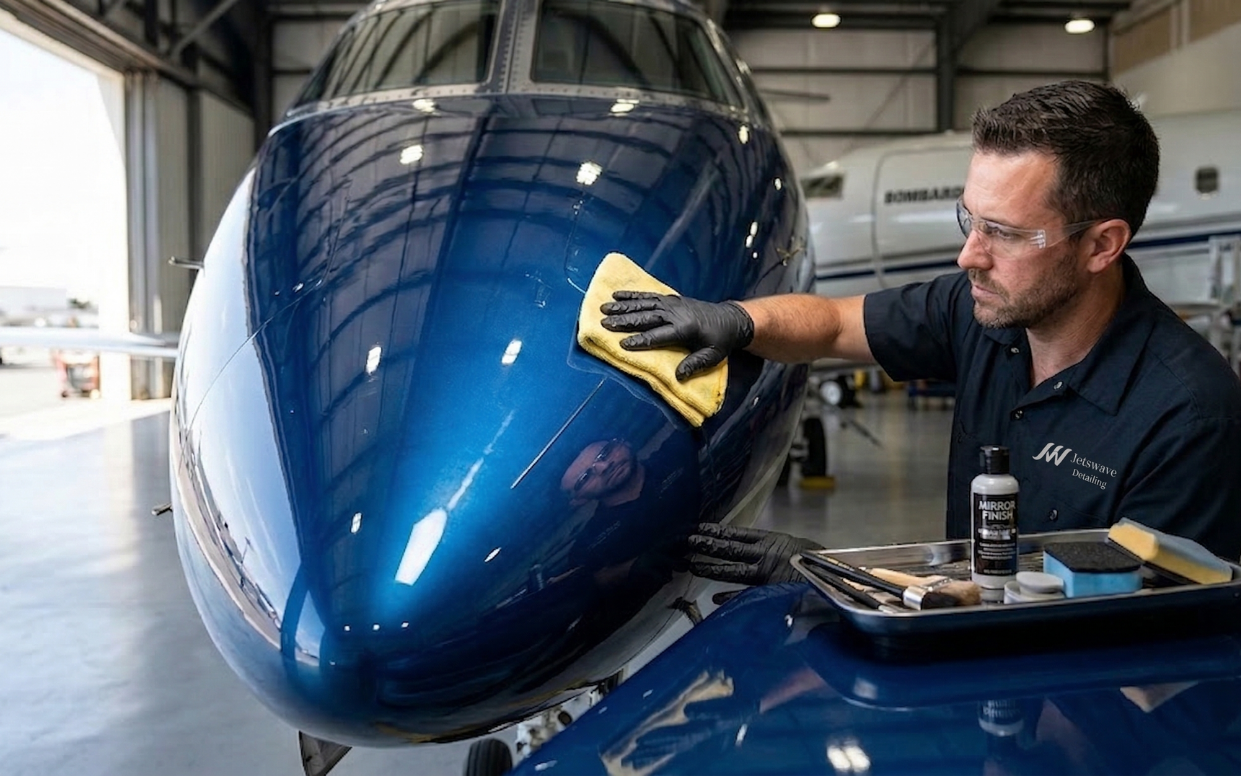
2. Full decontamination treatment
Beyond the wet wash, decontamination removes bonded contamination that standard washing cannot lift – embedded carbon deposits, bonded mineral deposits from water exposure, and fine metallic particles from brake and engine exhaust that have embedded in the paint surface over months of flying. This step is particularly important for aircraft that have been flying regularly through Northeast winters and early spring.
3. Brightwork restoration and polish
Every exposed polished metal surface – nose cap, wing leading edge sections, engine inlet lips, cowling trim – should be brought to mirror finish before the World Cup summer season. Northeast winter and spring conditions are aggressive on brightwork. Salt air near coastal airports, atmospheric moisture, and UV oxidation from spring sun all contribute to dulling and pitting. A full brightwork restoration uses compound, polish, and sealant in sequence to return every metal surface to its reflective best.
4. Exterior paint protection – wax application
A fresh coat of aviation-grade protective wax creates the hydrophobic barrier that will protect the painted surface through the heavy summer use period ahead. Wax repels water, contamination, and UV radiation during flight and during ramp exposure between flights. For an aircraft heading into the most active summer flying season in the Northeast in years, paint protection is not optional maintenance – it is investment protection.
5. Full window cleaning inside and out
Windscreen and all cabin windows, cleaned on both surfaces. Mineral deposits, oxidation, and atmospheric film on exterior glass reduce clarity and create a visual impression of neglect that is immediately obvious to anyone boarding the aircraft.
6. De-ice boot inspection and conditioning
After a Northeast winter season, de-ice boots used during IFR operations in icing conditions need to be inspected for cracking, delamination, or surface deterioration, and treated with the appropriate conditioning compound. Deteriorated de-ice boots are a safety and certification concern – and they are also far less expensive to maintain preventively than to replace reactively.
Interior – 6 points:
7. Complete vacuum and surface wipe-down
Every horizontal surface, overhead panel, window reveal, and interior trim surface wiped clean. This is the baseline layer under which all other interior services occur.
8. Leather cleaning and conditioning – full cabin
All leather surfaces throughout the cabin – seats, armrests, headrests, side panels, any leather-wrapped fixtures – cleaned with pH-neutral aviation leather cleaner and immediately conditioned with a dedicated leather conditioner. For an aircraft heading into a summer of heavy use and international travel, conditioning the leather now prevents the cracking and surface wear that develops progressively through months of unprotected use in low-humidity cabin environments.
9. Carpet extraction or dry cleaning – full coverage
Hot water extraction for standard aviation carpets removes embedded dirt, odors, and moisture at the fiber level. For more delicate carpet materials, dry cleaning achieves the same result without introducing moisture. The selection of method depends on the specific carpet material in your aircraft – Jetswave assesses and recommends the correct approach for each aircraft we service.
10. Galley deep clean and sanitation
All galley surfaces, fixtures, and appliance exteriors cleaned and sanitized. Grease accumulation in galley cabinetry and residue in appliance interiors create odors that concentrate during long flights. A pre-summer galley deep clean resets the baseline before the heavy-use season begins.
11. Lav full disinfection and deodorization
Complete disinfection of all lav contact surfaces – handles, fixtures, countertops, faucets, floor – and full deodorization treatment. For international World Cup travel involving guests who are experiencing the quality benchmark set by private aviation at major events, the lav condition is a direct signal of overall aircraft maintenance standards.
12. Targeted stain treatment across all surfaces
Any visible staining on carpet, leather, upholstery, or panel surfaces treated specifically before it becomes a permanent fixture. Stains set progressively with heat, UV exposure, and time – a spring detail that clears current staining prevents a summer of looking at problems that can no longer be fully resolved.
What International Guests Expect When You Fly Them Private
The 2026 World Cup is bringing international visitors to the Northeast at a scale this region has not seen before. For private jet owners who plan to host guests – business partners, clients, international family members, or any passenger flying private for the first time or returning to private aviation after years away – the aircraft condition sets an expectation before a single word is spoken.
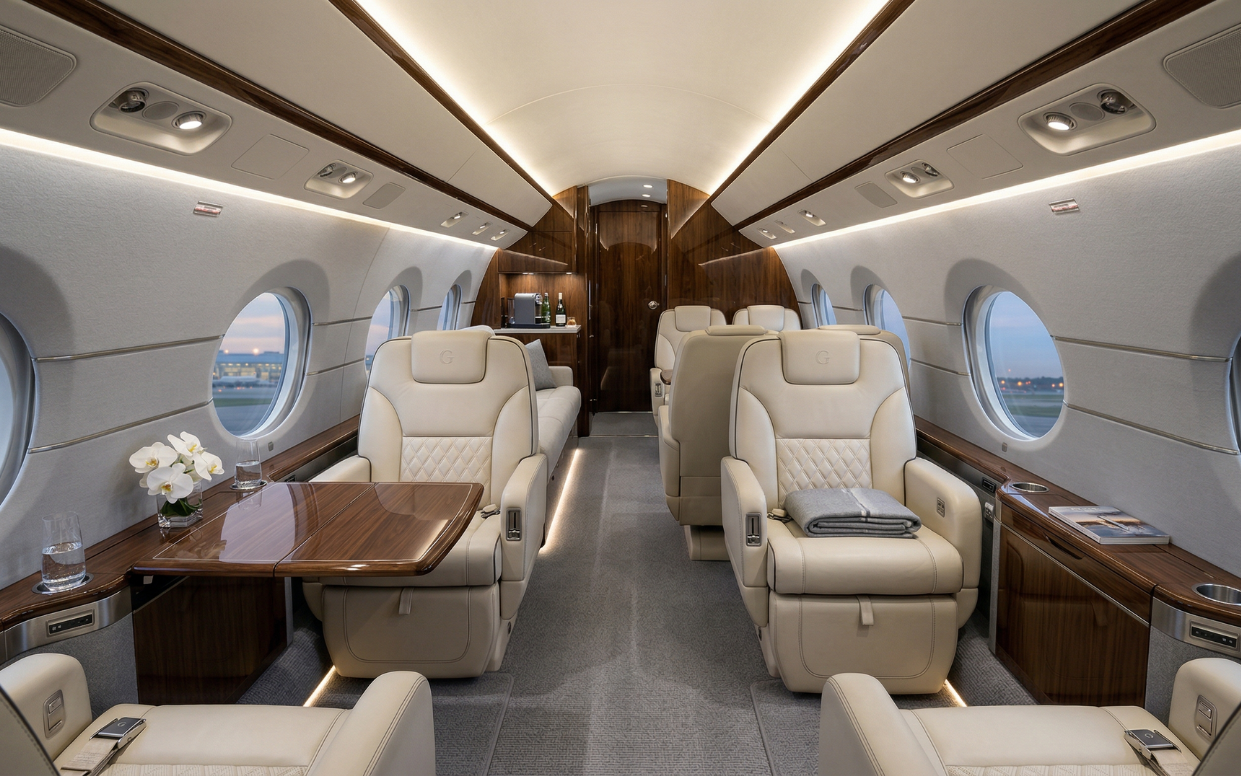
International guests arriving in the United States for the World Cup – from the UK, Spain, France, Germany, Brazil, Argentina, and beyond – are sophisticated travelers. Many of them are accustomed to the standard of private aviation in their home markets, where aircraft are routinely maintained to the presentation standards of the FBOs and airports they use. European FBOs at airports like Le Bourget in Paris, Farnborough in London, and Ibiza have established exceptionally high visual standards for ramp presentation.
When those guests board your aircraft at Teterboro or Logan or Hanscom Field, they form an immediate impression of your aircraft in the first 15 seconds. The smell of the cabin. The condition of the leather on the seat they settle into. The clarity of the window they look through on departure. The state of the lav when they use it on a transatlantic flight.
None of these impressions require explanation. They are either right or they are not. A properly detailed aircraft – one that has been on a consistent quarterly maintenance schedule, detailed professionally before the World Cup season, and reset after every major international trip – creates the right impression automatically. An aircraft that has been maintained reactively does not.
The standard for World Cup private jet hospitality is immaculate. A cabin that looks and smells like it was detailed this morning. An exterior that stands out on the ramp. Leather that is supple and clean. Carpet that has no odor. Windows that are clear. Jetswave delivers that standard, mobile, at your location, on your schedule.
The Case for Quarterly Maintenance: March → May → August
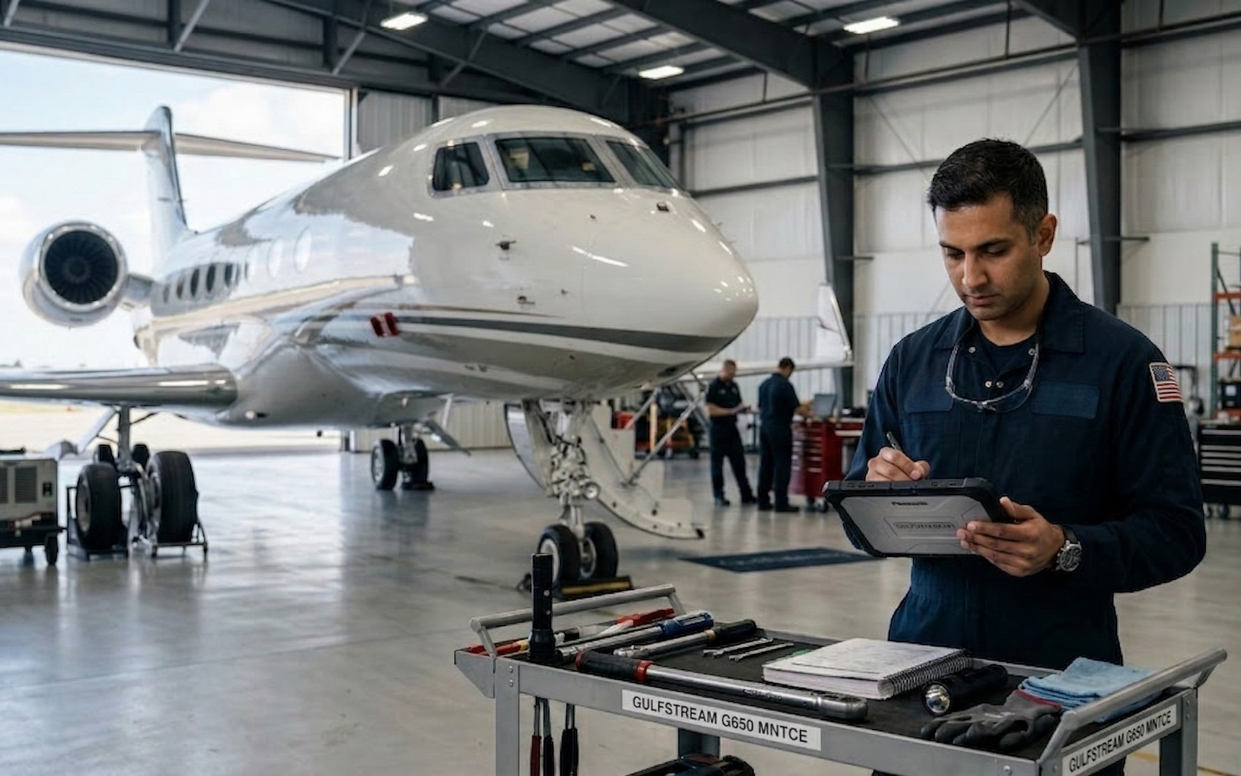
The most cost-effective approach to aircraft detailing – particularly for an owner heading into the most demanding aviation season this region has seen in years – is a scheduled quarterly program. Here is exactly how that looks for the World Cup season.
March 2026 – Quarterly Reset This is the detail happening now. Coming out of winter, after Champions League travel, before the spring ramp-up. Full exterior and interior service. Brightwork restoration. Leather conditioning. Carpet extraction. De-ice boot inspection. This sets the baseline for the season ahead and prevents the accumulation of winter wear from compounding into summer problems.
May 2026 – Pre-Tournament Detail The World Cup begins June 11. A May detail is your final preparation before the tournament period begins and FBO service availability tightens dramatically. This service confirms the exterior protection applied in March is still performing, refreshes interior surfaces after two months of spring use, and puts the aircraft in the exact condition it needs to be in for hosting international guests from June onward.
August 2026 – Post-Tournament Reset After the World Cup final on July 19 and the subsequent weeks of summer flying, a full August detail resets the aircraft for fall operations. This service addresses the accumulated wear from the summer’s heaviest use period and protects the aircraft’s systems and surfaces going into the next maintenance cycle.
Three details across six months. Predictable cost. No emergency remediation work. No scramble for availability during the most in-demand period of the year. No aircraft arriving at a World Cup event in substandard condition. This is what a quarterly program delivers – and this is what the owners and operators who understand long-term aircraft maintenance invest in.
Frequently Asked Questions – Aircraft Detailing for World Cup Travel
When should I detail my private jet before the 2026 World Cup?
The ideal schedule is a full detail now in March as part of a quarterly maintenance cycle, a second full detail in May as pre-tournament preparation, and a post-tournament reset in August. If you are on a reactive rather than scheduled maintenance program, book a comprehensive detail no later than May to ensure your aircraft is properly prepared before the tournament period begins and FBO service availability tightens. Jetswave is already booking World Cup season services – contact us now to secure your dates.
What airports near MetLife Stadium are best for private jets?
For private aviation traveling to MetLife Stadium for World Cup matches, the primary options are Teterboro Airport (KTEB) – 8 miles from the stadium and the premier private jet FBO hub in the New York metro area – and White Plains Airport (KHPN) and Morristown Airport (KMMU) as overflow alternatives when Teterboro slot availability is constrained on peak match days. Aviation planning experts are already advising that JFK and Newark will face significant congestion on World Cup match days. Teterboro is the right answer for most private jet arrivals, and Jetswave serves Teterboro as one of our primary service locations.
How do I prepare my aircraft for heavy summer use?
Heavy summer use preparation starts with a full pre-season detail covering all exterior and interior systems, followed by a consistent maintenance schedule throughout the season. Specifically: exterior wet wash and wax reapplication before the season begins, brightwork inspection and polish, full interior reset including leather conditioning and carpet extraction, and galley and lav sanitation. For aircraft expecting regular international use during the World Cup period, we recommend a post-trip reset within 48 hours of each return from a major international departure.
Is aircraft detailing required before international flights?
Aircraft detailing is not a regulatory requirement in the same way as airworthiness maintenance. However, it serves both cosmetic and structural functions that directly affect the aircraft’s long-term condition and value. FAA-approved cleaning products are required when cleaning surfaces that could be affected by non-aviation chemicals – this is where the “FAA-approved” standard matters practically, not just as a marketing claim. Beyond compliance, the presentation standard for international private aviation – particularly at major events like the World Cup – makes professional detailing functionally essential rather than optional.
What is a quarterly aircraft detailing program?
A quarterly aircraft detailing program is a scheduled service agreement that delivers a complete exterior and interior detail every three months. This approach prevents the accumulation of wear, contamination, and deferred maintenance that leads to more expensive remediation work. At Jetswave, a quarterly program includes priority scheduling, consistent service quality from a team familiar with your specific aircraft, and the cost efficiency of planned maintenance versus reactive cleanup. For aircraft owners heading into the 2026 World Cup season, a quarterly program established in March is the most sensible maintenance investment available.
How long does full private jet detailing take?
A complete exterior and interior detail typically takes 4 to 8 hours depending on aircraft size. Light jets – Citation CJ series, Phenom 300 – complete in 4 to 5 hours. Midsize aircraft – Hawker 800, Citation XLS, Learjet 75 – require 5 to 7 hours. Large-cabin jets – Gulfstream G450, G550, Challenger 604, Global 6000 – and ultra-long-range aircraft need 7 to 10 hours for a full service. We schedule around your departure window and flight operations. Tell us when you need the aircraft ready and we work backward from that time.
Mobile Detailing Service Across 8 Northeast States
Jetswave Detailing is entirely mobile. We come to your aircraft – at your FBO, at your ramp, at your hangar – anywhere across Massachusetts, New York, New Jersey, Connecticut, Maine, New Hampshire, Rhode Island, and Vermont. No repositioning required. No hangar needed. No disruption to your flight schedule.
For the 2026 World Cup season – with the final at MetLife Stadium on July 19 and group stage matches at Gillette Stadium in Foxborough beginning in June – our Northeast service area is the right location to be for private aviation detailing. We serve Teterboro (KTEB), Boston Logan (KBOS), Hanscom Field (KBED), Westchester County (KHPN), and the full network of FBOs across all 8 states.
We use only FAA-approved, environmentally safe products. Our team is fully licensed and insured. We carry full liability coverage and operate with the professional standards that Northeast FBOs and aircraft management companies expect from a contracted service provider.
The World Cup aviation season is 134 days away. The owners who call in March will have their aircraft on a schedule. The owners who call in June will be competing for availability during the busiest private aviation period this region has ever seen.
📞 +1 (857) 313-1355 ✉️ info@jetswavedetailing.com 🌐 jetswavedetailing.com
The Bottom Line
The 2026 FIFA World Cup final is happening at MetLife Stadium, New Jersey on July 19. Gillette Stadium in Foxborough is a host venue. JFK and EWR are expected to face slot restrictions on peak match days. Teterboro, White Plains, and Morristown will handle the overflow. More than six million visitors are coming to 16 host cities across North America. Private jet activity in the Northeast will reach levels this region has never seen.
The private jet owners who arrive at those FBOs in the right condition – aircraft detailed, protected, and properly maintained – made the decision months in advance. That decision is available to you right now, in March, with 134 days remaining before the tournament begins.
A quarterly detailing schedule starting now means a March reset, a May pre-tournament preparation, and an August post-World Cup restoration. Three services. One consistent provider. An aircraft that is ready for the biggest aviation event this region has ever hosted.
Jetswave Detailing delivers that preparation – mobile, professional, FAA-compliant – across the entire Northeast. On your schedule. At your aircraft.
Don’t arrive at the World Cup unprepared.
Jetswave Detailing provides professional private jet detailing and aircraft cleaning services across Massachusetts, New York, New Jersey, Connecticut, Maine, New Hampshire, Rhode Island, and Vermont. FAA-approved products. Fully licensed and insured. Mobile service delivered directly to your aircraft.