

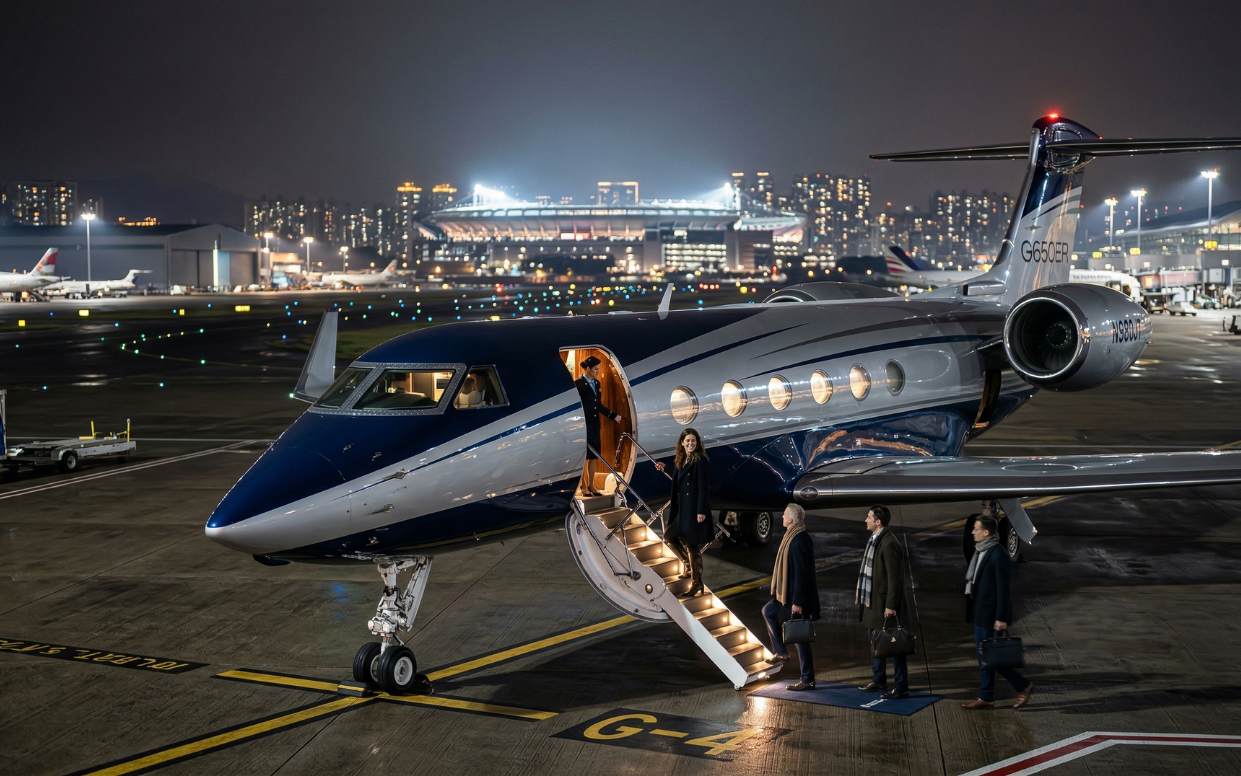
The 2025-26 UEFA Champions League Round of 16 is here. First legs kicked off on March 10 and 11, 2026. Second legs follow on March 17 and 18. Eight of the most watched football matches in the world are happening right now – Real Madrid vs. Manchester City at the Bernabéu, PSG vs. Chelsea at Parc des Princes, Barcelona vs. Newcastle, Atlético Madrid vs. Tottenham – and the people flying private to these matches have one thing in common: they expect their aircraft to perform and present flawlessly.
If you own or operate a private jet in the Northeast United States and you have any connection to Champions League travel – either as an owner heading to Europe, or as an operator hosting guests who are – this is your pre-departure aircraft detailing checklist. Everything you need. In the right order. With nothing left out.
At Jetswave Detailing, we’ve built our mobile service across Massachusetts, New York, New Jersey, Connecticut, Maine, New Hampshire, Rhode Island, and Vermont specifically around the demands of private jet owners who travel on schedules like this. We know what a transatlantic departure requires. We know what inspectors at European FBOs notice. And we know what it feels like to land in Madrid or Paris in an aircraft that hasn’t been properly detailed since the last international trip.
That feeling is avoidable. Here’s how.
Why the Champions League Round of 16 Changes Your Jet’s Schedule
Most private jet owners maintain some version of a maintenance routine. Oil checks, avionics reviews, cabin refreshes when someone remembers. But the Champions League Round of 16 is not a routine trip.
This is a match day trip – compressed timeline, high-profile passengers, European ramp exposure, and an expectation of presentation quality that goes well beyond domestic travel. You’re not flying from Teterboro to Palm Beach. You’re landing at Adolfo Suárez Madrid-Barajas, or Charles de Gaulle, or Barcelona-El Prat, parking on a ramp that every aviation professional connected to these clubs passes through, and returning 24 to 48 hours later with a cabin that has been fully used.
The private jet activity around the Champions League Round of 16 is concentrated into a very short window. Both legs of all eight ties happen within a nine-day span – March 10 through 18. That means jets are departing, sitting on European ramps, and returning to Northeast airports all within the same two weeks. There is no buffer for a substandard aircraft condition.
The solution is not to rush a detail the morning of departure. The solution is a structured, checklist-driven approach that covers every system – exterior and interior – before you leave.
Exterior Detailing – What Builds Up Between Flights
The exterior of a private jet is its first impression and its most vulnerable system. Most owners are surprised by how much contamination accumulates even between routine flights – and how quickly that contamination degrades the aircraft’s appearance and, over time, its surface integrity.
Before a transatlantic Champions League flight departing from a Northeast FBO, the exterior needs to be in genuinely excellent condition. Here’s what builds up and what needs to be addressed.
Wet Wash and Full Decontamination
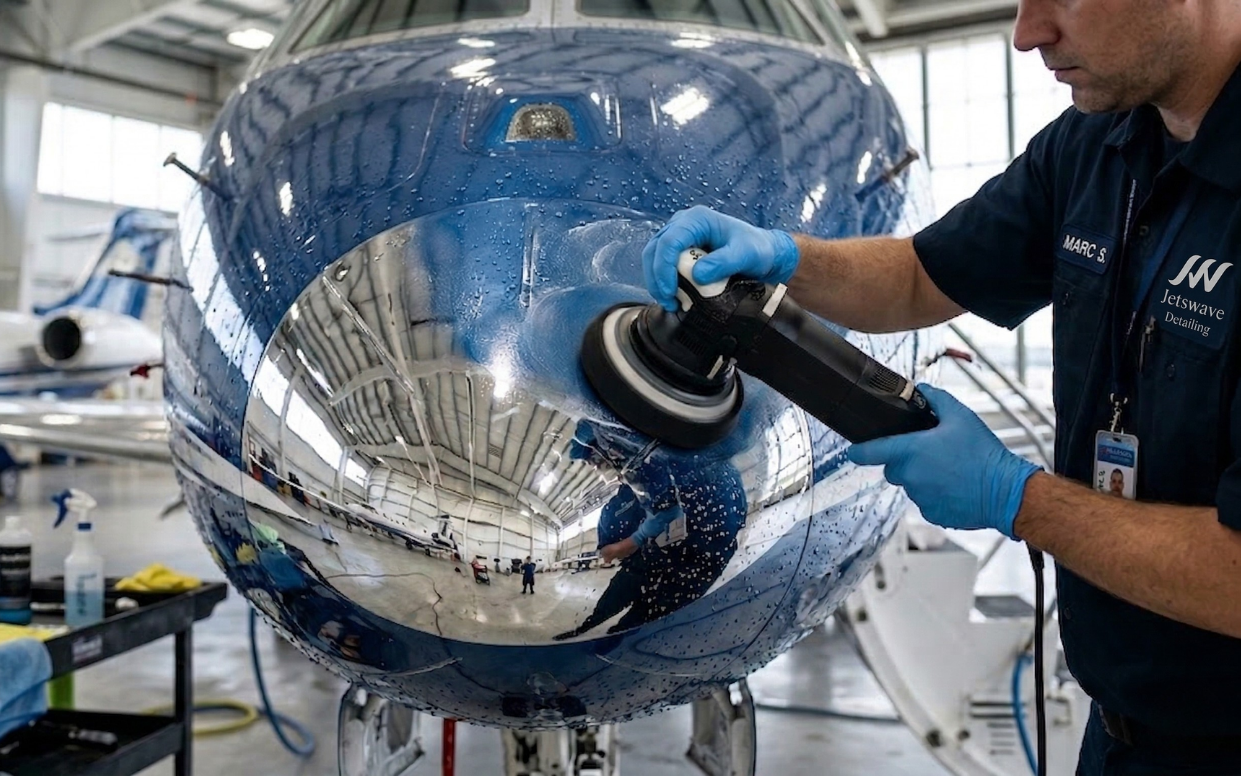
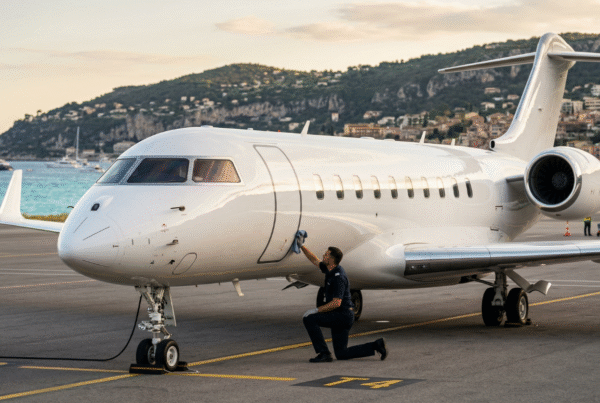
A proper pre-departure wet wash is not a rinse. It’s a two-stage process: pre-soak with an FAA-approved aircraft-specific detergent to loosen and lift contamination, followed by a full hand wash with soft materials that won’t scratch painted surfaces or degrade protective coatings.
What you’re removing: exhaust staining around the engine nacelles and APU exhaust port, insect residue on the leading edges of the wings and horizontal stabilizers, road salt particulates that have accumulated in Northeast air during winter and early spring, fuel spillage residue near the fuel cap areas, and general atmospheric grime that settles on horizontal surfaces during ramp time.
Each of these, left in place, contributes to paint degradation over months and years. Before an international trip, they also create a visible, unprofessional appearance on the ramp at your destination.
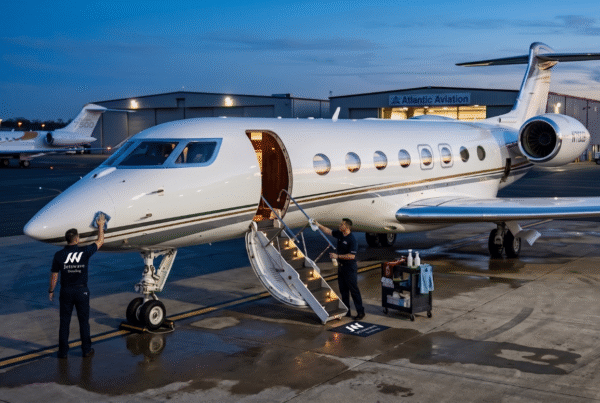
Every aircraft we service at Jetswave receives a full wet wash with FAA-approved, environmentally safe products – the only products appropriate for use on aircraft paint, glass, and composite surfaces. We bring everything to your location across all 8 Northeast states. No hangar required.
Brightwork Polishing
Brightwork refers to all exposed polished metal surfaces on the aircraft exterior: the nose cap, wing leading edge metal sections, engine inlet lips, cowling trim, and any decorative metal on the airframe. It’s one of the first things anyone notices on a well-maintained aircraft – and the first thing that reveals a poorly maintained one.
Northeast winters are hard on brightwork. Atmospheric moisture, salt air near coastal airports like Logan (KBOS) and Republic (KFRG), and simple oxidation from UV exposure all dull and pit polished metal over time. Before a Champions League trip – where your aircraft will be sitting in plain view at a major European aviation hub – brightwork should be polished to mirror quality.
At Jetswave, brightwork polishing is a dedicated step, not an afterthought. We use compound, polish, and sealant in sequence, working by hand to restore the reflective quality of every metal surface on the aircraft’s exterior.
Paint Protection and Wax Application
A clean aircraft that leaves for Europe without a fresh coat of protective wax is arriving cleaner than it left. Wax creates a hydrophobic barrier over the painted surface that repels water, contamination, and UV radiation during flight. It also dramatically simplifies the post-trip cleaning process when the aircraft returns.
For pre-departure detailing, we apply a high-quality carnauba or synthetic wax formulated specifically for aircraft finishes – products that bond to aviation-grade paint and remain stable through the pressurization, temperature variation, and atmospheric exposure of a transatlantic flight.
Interior Detailing – Your Cabin Is Your First Impression
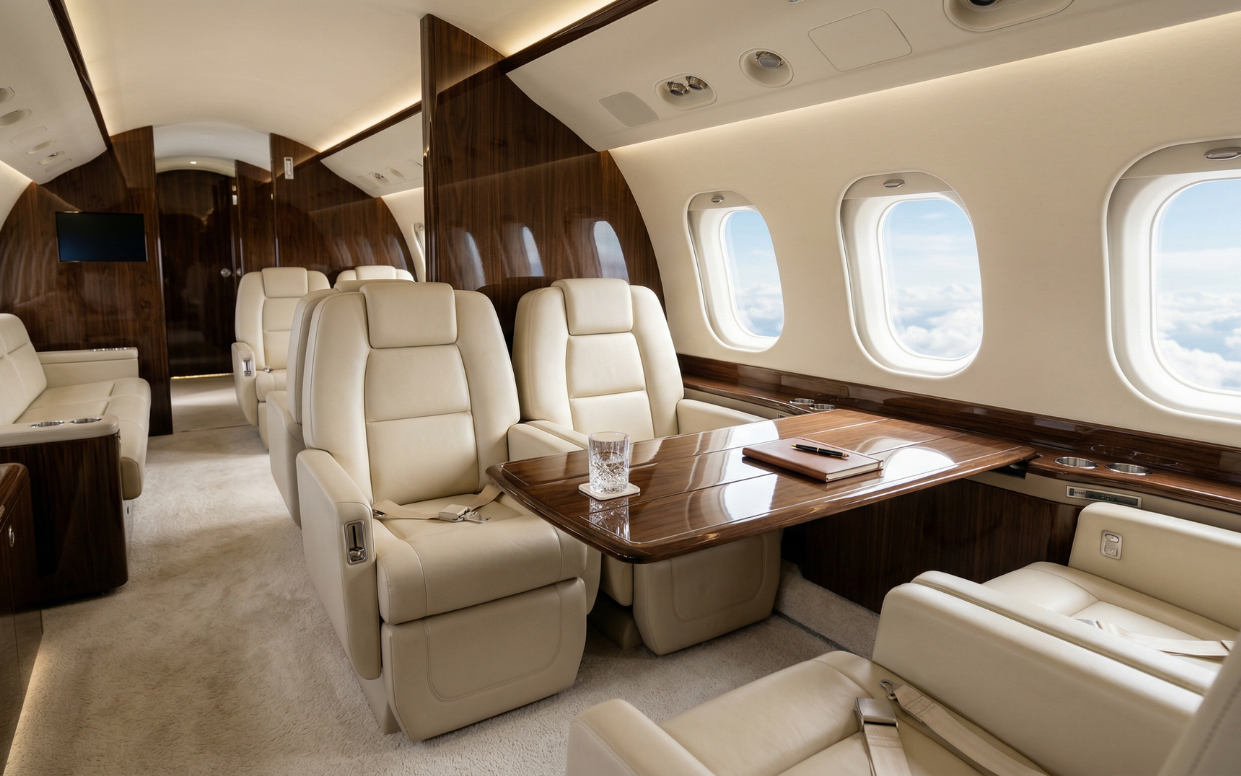
If the exterior is your aircraft’s presentation on the ramp, the interior is everything your passengers experience from boarding to landing. For a Champions League trip carrying a club owner, a group of sponsors, or a high-net-worth VIP passenger, the interior standard needs to be exceptional.
These are not guests accustomed to compromise. They have flown on the best aircraft in the world. They know what a properly maintained leather seat feels like, what a genuinely clean carpet smells like, and what a sanitized lav means on a 7-hour overnight flight. The details matter.
Leather Cleaning and Conditioning
Aviation leather is a premium material that requires specific care. It’s different from automotive leather – it’s typically thicker, more supple, and used across a much wider temperature range as cabin pressurization and altitude affect the ambient environment.
Without regular conditioning, aviation leather dries out. This happens faster than most owners realize, particularly in the Northeast where dry winter air at cabin altitude accelerates moisture loss. Dried leather cracks. Cracked leather on a $30,000 seat is not a maintenance issue – it’s a presentation failure on a multi-thousand-dollar trip.
Before every international departure, leather seats and surfaces should be cleaned with a pH-neutral aviation leather cleaner to remove body oils, surface grime, and any residue from previous flights, followed immediately by a dedicated leather conditioner that restores suppleness and protects against the low-humidity environment of long-haul cabin air.
At Jetswave, we treat every leather surface: seats, armrests, headrests, side panels, and any leather-wrapped fixtures in the galley or lav area. The difference is immediately visible – and more importantly, immediately felt by your passengers.
Carpet Extraction and Dry Cleaning
Carpet is the most used and least cleaned surface in most private jet cabins. Foot traffic carries in everything from ramp grime to rain to spilled drinks, and most of it compresses into the carpet fibers where it builds up invisibly between details.
For a Champions League trip – particularly one where passengers may be celebrating or returning after a long, emotionally charged match – the carpet needs to start in the best possible condition. That means extraction, not surface cleaning.
Hot water extraction removes embedded dirt, odors, and moisture that surface vacuuming cannot reach. For more delicate carpet materials, dry cleaning is the appropriate method – no moisture introduced, no risk of shrinkage or fiber damage, and equally thorough penetration of the carpet pile.
We assess the carpet condition and select the right method for each aircraft. The result is a cabin that smells genuinely clean – not masked with fragrance, genuinely cleaned at the fiber level.
Galley and Lav Sanitation
The galley and lavatory are the two areas of a private jet cabin that guests notice most when they’re not right – and least when they are. Proper sanitation means complete disinfection of all contact surfaces (handles, fixtures, countertops, faucets), deodorization of the lav, restock check of all supplies, and a visual inspection that everything is ready for use.
For international flights, lav sanitation is not optional. FAA and international aviation standards require aircraft lavatories to be maintained in a condition that meets hygiene requirements. Beyond compliance, a poorly maintained lav on a transatlantic flight is simply unacceptable.
Jetswave’s interior detail includes full galley and lav sanitation as a standard component – not an add-on.
The Complete Pre-Departure Checklist (12-Point)
Use this before every major departure. Print it, save it, share it with your FBO or aviation management company.
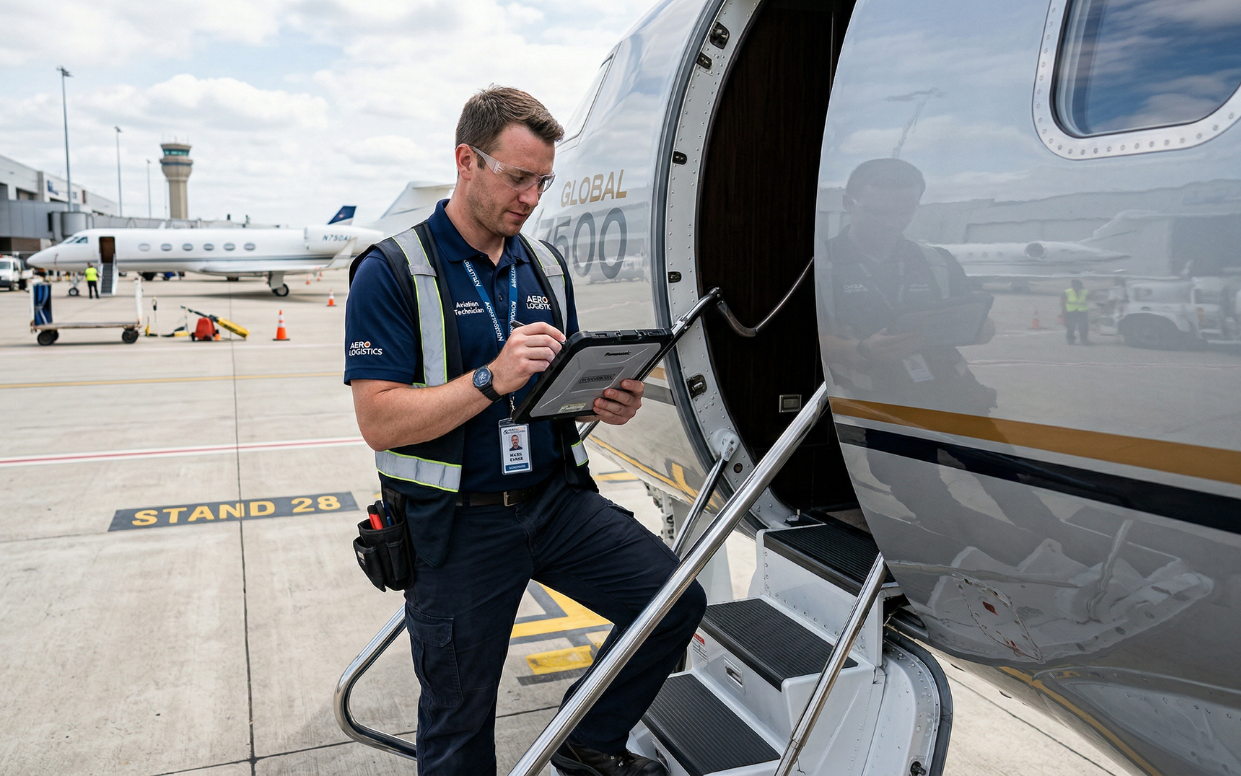
Exterior:
- Full wet wash with FAA-approved aircraft detergent – all painted surfaces, glass, and composite panels
- Brightwork polish – nose, leading edges, engine inlets, cowling trim, all exposed metal
- Paint decontamination – remove bonded contamination that wash alone cannot lift
- Protective wax application – full painted exterior coverage
- Window cleaning – windscreen and cabin windows, inside and outside
- De-ice boot inspection and treatment – if used this winter, condition before departure
Interior:
7. Full vacuum and surface wipe-down – every horizontal surface, overhead panels, window reveals
8. Leather cleaning and conditioning – all seats, armrests, headrests, side panels
9. Carpet extraction or dry cleaning – full cabin coverage, assessed per material type
10. Galley deep clean and sanitation – all surfaces, fixtures, appliance exteriors
11. Lav full disinfection and deodorization – all contact surfaces, fixtures, floor
12. Stain treatment – targeted removal of any visible staining on carpet, leather, or upholstery
Frequently Asked Questions – Private Jet Detailing Before International Travel
How long does a full private jet detail take?
A complete pre-departure detail – exterior and interior – typically takes between 4 and 8 hours depending on aircraft size. A light jet (Citation CJ series, Phenom 300) can be completed in 4-5 hours. A midsize aircraft (Hawker 800, Citation XLS) requires 5-7 hours. A large-cabin jet (Gulfstream G450, Challenger 604) or ultra-long-range aircraft needs 7-10 hours. We schedule around your departure window. Tell us when you’re leaving and we work backward from there.
What products are FAA approved for aircraft cleaning?
FAA-approved aircraft cleaning products have been evaluated and approved for use on aircraft surfaces without causing damage to paint, composites, glass, metal, or sealants. At Jetswave, we use only products that meet FAA standards and are environmentally safe. We never use products designed for automotive use on aircraft surfaces – the chemical formulations are different and can damage aviation-specific finishes.
How often should I detail my private jet?
For regular-use aircraft (4+ flights per month), a full exterior and interior detail every 4-6 weeks is the minimum standard. For aircraft used primarily for international or long-haul travel, a full detail before and after each major trip is the right approach. Quarterly deep maintenance details are recommended for all aircraft regardless of use frequency.
Can you detail a jet at an FBO without a hangar?
Yes – and this is exactly what Jetswave is built for. Our mobile service brings everything needed to perform a complete aircraft detail at your ramp location. We operate across Teterboro (KTEB), Westchester County (KHPN), Boston Logan (KBOS), Hanscom Field (KBED), and FBOs across all 8 Northeast states. No hangar required.
What’s the difference between a wet wash and a dry wash on an aircraft?
A wet wash uses water, FAA-approved detergents, and rinsing to remove contamination from the aircraft exterior. It’s the most thorough cleaning method for painted surfaces. A dry wash – also called a waterless wash – uses chemical cleaning agents that dissolve and lift contamination without water. Dry wash is ideal when water use is restricted at an FBO, in cold weather when water would freeze on surfaces, or when a quick turnaround is needed. Both methods are appropriate in different circumstances; our team assesses conditions and recommends the right approach for each service.
Mobile Detailing Service Across 8 Northeast States
Jetswave Detailing is built entirely around the schedule and location of your aircraft. We do not require you to bring your jet to us. We come to you – at your FBO, at your hangar, at your ramp – anywhere across Massachusetts, New York, New Jersey, Connecticut, Maine, New Hampshire, Rhode Island, and Vermont.
For Champions League travel happening now, the timeline is tight. First legs are done. Second legs are March 17 and 18. If your aircraft is returning from Europe this week, the post-trip reset should happen before the next departure. If you’re flying out for the second legs, the pre-departure detail needs to happen now.
We use only FAA-approved, environmentally safe products. Our team is fully licensed and insured. We carry full liability coverage and operate with the professional standards that Northeast private jet operators and FBOs expect.
For the Champions League and everything that follows – the quarterfinals in April, the UEFA final in Budapest on May 30, and the FIFA World Cup starting June 11 right here in the Northeast – your aircraft needs to be on a consistent detailing schedule. The summer is going to be the most active private aviation season this region has seen in years.
Get on the schedule now.
📞 +1 (857) 313-1355 ✉️ info@jetswavedetailing.com 🌐 jetswavedetailing.com
The Bottom Line
Private jet travel to Champions League matches is not a standard trip. The passengers are high-profile, the ramps are visible, and the expectations are uncompromising. Your aircraft’s condition reflects directly on you – before passengers board, during the flight, and the moment you open the door on a European ramp.
A structured, 12-point pre-departure detailing process – exterior decontamination, brightwork polishing, paint protection, leather care, carpet cleaning, and full galley and lav sanitation – is not a luxury. It is the baseline standard for international private jet travel.
Jetswave Detailing delivers that standard, mobile, across the entire Northeast, on your schedule.
Don’t leave without it.
Jetswave Detailing provides professional private jet detailing and aircraft cleaning services across Massachusetts, New York, New Jersey, Connecticut, Maine, New Hampshire, Rhode Island, and Vermont. FAA-approved products. Fully licensed and insured. Mobile service delivered directly to your aircraft.